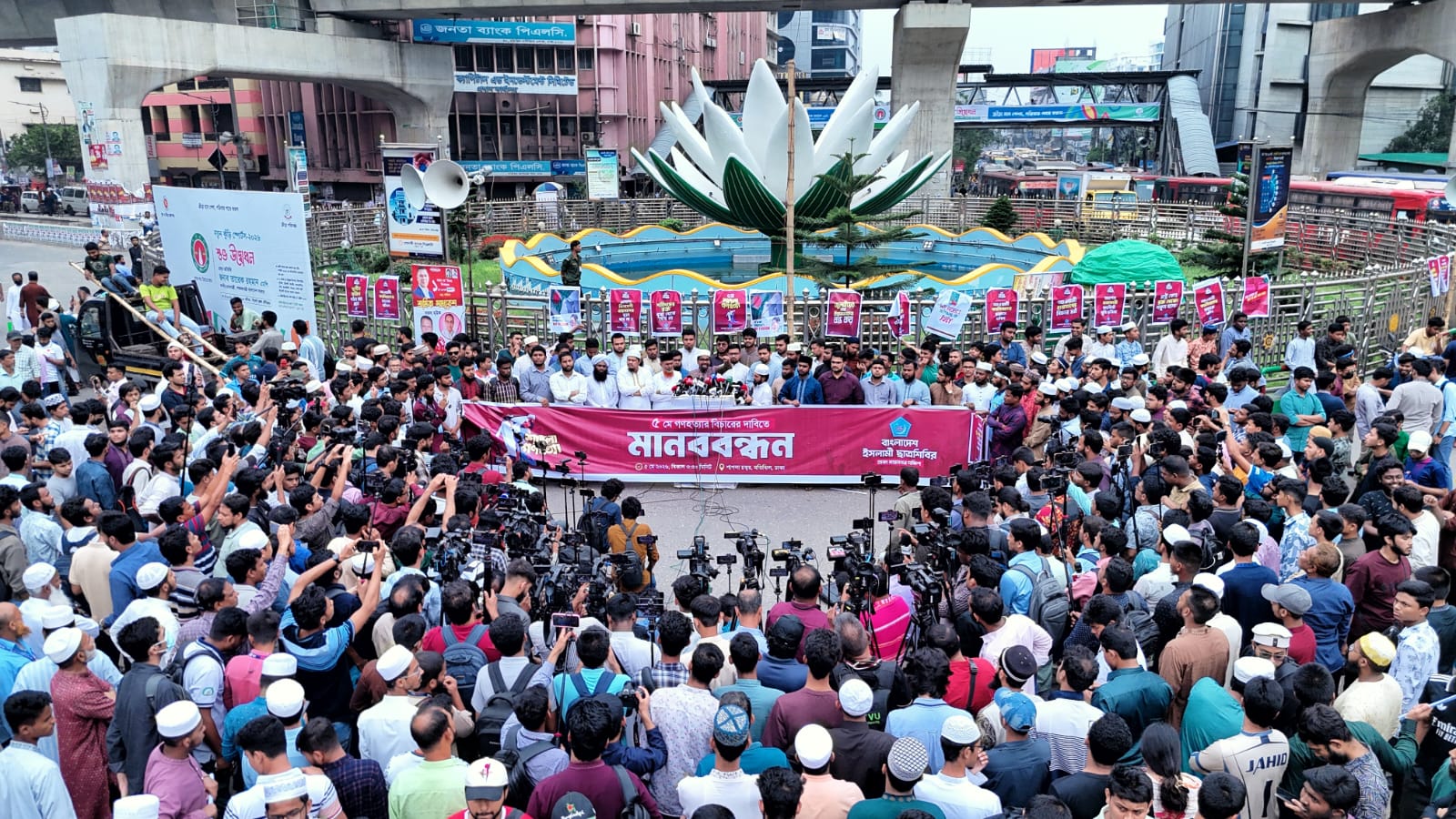
MM Rahmatullah: Fresh demands for an official investigation into the events of May 5, 2013, at Motijheel’s Shapla Chattar resurfaced on Tuesday, as leaders of Bangladesh Islami Chhatrashibir called for a white paper and judicial proceedings over what they described as a “mass killing.”
Speaking at a human chain organized by the Dhaka Metropolitan South unit of the student organization, its central president Nurul Islam alleged that the incident was part of a broader plan aimed at suppressing Islamic leadership. He urged the government to immediately disclose the “actual facts,” including the number of killed, and to ensure accountability through the International Crimes Tribunal.
The programme, held at Shapla Chattar in the afternoon, drew over a thousand activists. It began with a recitation from the Holy Quran and was presided over by the unit’s president, Hafiz Delwar Hossain.
In his remarks, Nurul Islam claimed that religious scholars faced widespread repression following the incident, including arrests, prolonged detention, and multiple cases. He further alleged that several media outlets were shut down at the time, limiting public access to information.
The Chhatrashibir leader also called for compensation for families affected by the incident and reiterated demands for justice for those responsible. In addition, he urged the enactment of a blasphemy law, arguing it was necessary to protect religious sentiments and maintain social stability.
Special guest Maulana Abdul Halim echoed similar concerns, calling for an investigation into the incident and punishment for those he described as “masterminds.” He also referenced political responses from opposition alliances at the time, noting that protests had followed immediately after the incident.
Other speakers at the event included former Chhatrashibir leaders and representatives from allied organizations, all of whom emphasized the need for transparency, accountability, and closure regarding the incident.
The May 5, 2013 events at Shapla Chattar remain a subject of political and social debate in Bangladesh, with differing narratives continuing to shape public discourse more than a decade later.