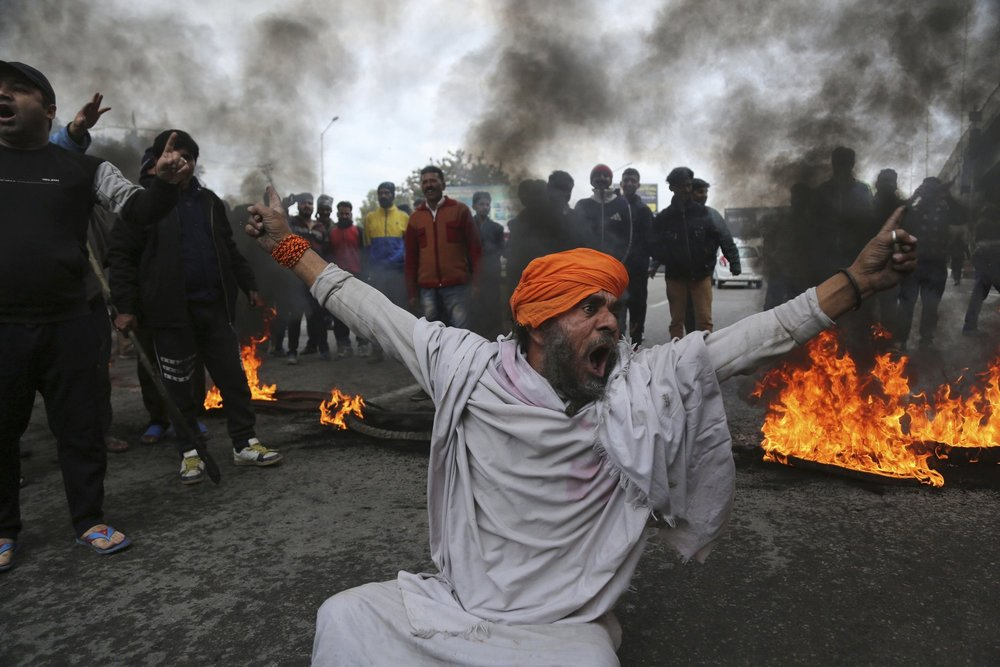
Moon Desk: Questions are once again being raised over the role of the Rashtriya Swayamsevak Sangh (RSS) in the growing atmosphere of hate, violence and fear faced by Muslims and other minorities in India, as the organisation has started a fresh international campaign to defend its image in Western countries. The RSS, the ideological parent of the ruling Bharatiya Janata Party (BJP), has begun holding meetings in countries including the United States, Britain and Germany. Senior RSS leaders say the purpose of these meetings is to counter what they describe as “misconceptions” about the organisation.
The move comes at a time when international human rights groups, Muslim organisations and religious freedom observers have repeatedly expressed concern over increasing attacks, hate speeches and discrimination targeting Muslims in India. For years, the RSS and several of its affiliate organisations have faced criticism from activists, academics and minority groups who accuse them of promoting Hindu majoritarian politics and creating social divisions between Hindus and Muslims.
Many Muslim groups in India say the atmosphere in the country has changed sharply in recent years, with hate speeches, mob violence, bulldozer actions and online campaigns against Muslims becoming more common. A Muslim academic based in Delhi said, “Muslims in India increasingly feel isolated and unsafe. The concern is not only physical violence but also the constant social and political targeting of the community.”
According to him, the RSS has been accused internationally of promoting Hindu supremacy, treating minorities as second-class citizens and encouraging extremist thinking. The outreach campaign has started only months after the United States Commission on International Religious Freedom raised serious concerns regarding the RSS in one of its reports.
It alleged that the RSS and its affiliated groups had for decades contributed to an atmosphere of hatred and violence against minority communities, particularly Muslims and Christians. The body monitors religious freedom conditions around the world and advises the US administration and Congress. Human rights activists say these concerns cannot be ignored because many incidents of communal violence in recent years have involved slogans, campaigns or narratives linked to hardline Hindu nationalist groups.
A Muslim social activist from Uttar Pradesh said, “The world is now paying attention to what Indian Muslims have been saying for years. Hate speeches and calls for violence cannot simply be dismissed as misunderstandings.”
Prime Minister Narendra Modi was associated with the RSS in his early years and remains closely linked to its ideological background. Political observers say the rise of the BJP as India’s dominant political force has also strengthened the influence of the RSS across institutions and public life. Critics argue that this political growth has coincided with rising social polarisation and increased pressure on Muslims in several parts of the country.
The RSS has also remained a controversial organisation because of historical events linked to its past. After the assassination of Mahatma Gandhi in 1948, the organisation was banned by the Indian government. Nathuram Godse, who assassinated Gandhi, had past connections with the RSS, though the organisation has long denied institutional involvement in the killing.
Over the years, the RSS has repeatedly tried to present itself as a nationalist social organisation, but criticism from minority groups and international observers has continued. Several Muslim scholars say the real issue is not public relations abroad but the situation faced by ordinary Muslims inside India. Observers believe the RSS’s international campaign is likely to face continued questions from rights organisations and academics who have documented incidents of communal violence and hate speech in India over the past several years. As the organisation increases its global outreach, the debate over the condition of minorities in India, especially Muslims, is expected to remain under international scrutiny.